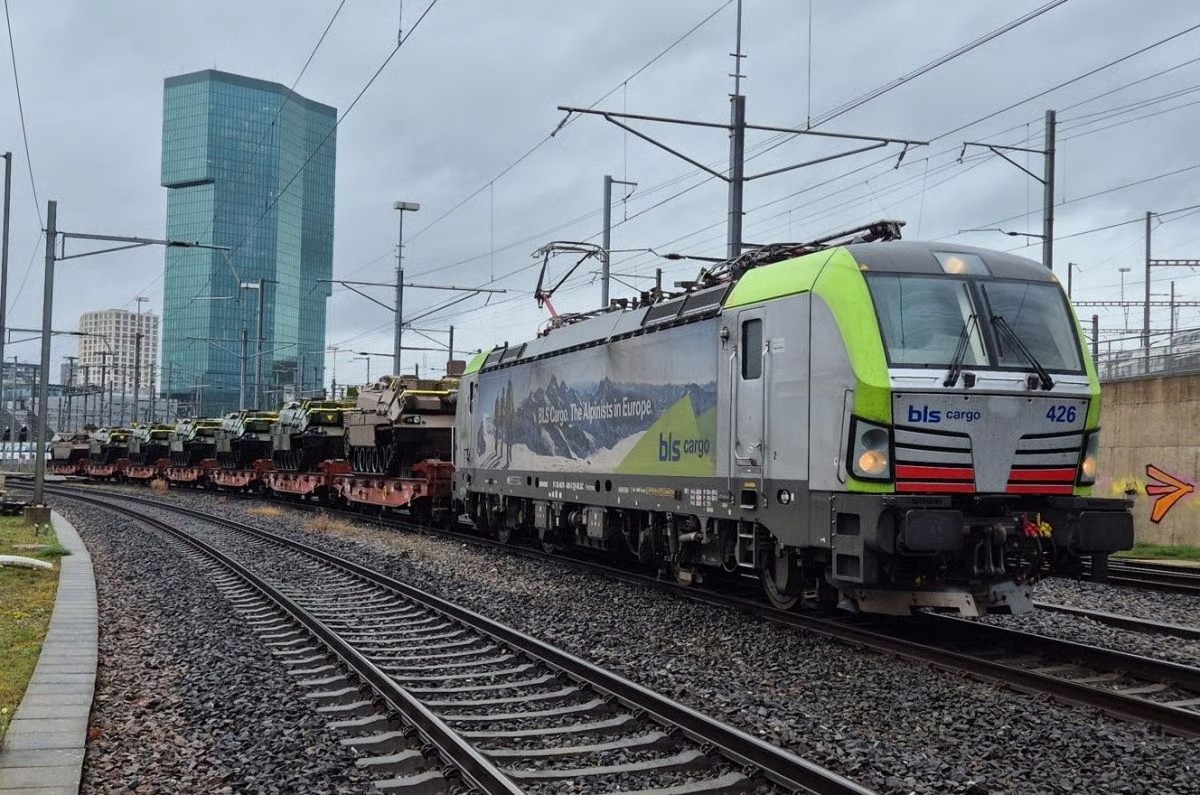
We, the European associations representing rail leasing companies (AERRL), passenger new entrants (ALLRAIL), and private and independent rail freight companies (ERFA), welcome the European Commission’s Military Mobility Package, presented in November 2025 by the European Commission and the High Representative for Foreign Affairs and Security Policy, which proposes a comprehensive framework to facilitate the swift, coordinated and secure movement of military personnel and equipment across the European Union.
We also welcome the ongoing work at the European Parliament and its deliberation on the EC proposal for a Regulation on establishing a framework of measures to facilitate the transport of military equipment, goods and personnel across the Union (COM(2025) 847 final and 2025/0847 (COD)).
These latest initiative marks an important step towards strengthening Europe’s defence readiness and operational preparedness, including through smoother cross-border procedures and enhanced resilience of transport infrastructure.
Rail transport plays a central role in delivering these objectives. In this context, AERRL, ALLRAIL, and ERFA underline the importance of ensuring that military mobility policies reinforce the performance, resilience and interoperability of the European rail system, while remaining fully consistent with the principles of the Single European Railway Area and the existing EU railway acquis.
Market participation and level playing field
Military mobility initiatives should fully respect EU internal market principles, including transparency, non-discrimination and level playing field. Recent news about the signed agreement between PKP CARGO S.A. and the Ministry of National Defense regarding cooperation in the transport of military equipment in accordance with the philosophy of “dual use” and to relieve pressure on road infrastructure – although a positive development for rail transport - illustrates the importance of ensuring that military mobility frameworks do not unduly advantage incumbent state-owned operators or distort access to public funding and strategic transport contracts. State-owned operators such as DB Cargo and PKP Cargo should not alone be entrusted with military mobility. Independent operators are similarly capable of responding to military mobility demand.
In this context, rail market actors, including rolling stock lessors, constitute a key investment pillar of the European rail system. Rolling stock lessors invest approximately €800 million annually in new rolling stock, with investment levels expected to reach around €1 billion per year by 2027. This long-term private capital base is essential to ensuring fleet availability, cross-border operability and the deployment of interoperable and ERTMS-compliant vehicles across Europe. Tenders for military logistic services need to be open to the whole market. The private rail market is growing, and it can complement and contribute to European defence by offering needed rolling stock and available services. Where public funding is made available under military mobility programmes, eligibility criteria, allocation procedures and governance arrangements should be transparent and non-discriminatory. Investments financed through European instruments should strengthen the resilience and preparedness of the overall rail system and benefit all eligible market participants.
Compensation and Legal Certainty under Emergency Mechanisms
We recognise the fact that emergency mechanisms such as the European Military Mobility Enhanced Response System (EMERS) can be activated in times of crisis, enabling rapid, EU-wide prioritisation of military movements. This will affect all pre-planned commercial rail traffic and services and create operational restrictions of rolling stock use or transport capacity.
Where such mechanisms are implemented, operators and lessors should benefit from fair and transparent compensation or mitigation schemes, if their services would not be considered. Compensation mechanisms should be clearly defined, proportionate and predictable in order to provide legal and operational certainty to railway undertakings and rolling stock lessors. Maintaining investor confidence will be essential to ensure the continued availability of rail assets that may be required in emergency situations.
Furthermore, given the likely direction of military movements, where possible, pre-planned emergency timetables should be established. These emergency timetables should distribute the burden of disruption as fairly as possible while permit efficient capacity allocation.
Solidarity Pool and Governance Framework
The proposed Solidarity Pool could provide valuable additional resilience capacity for Europe. However, its set-up should reflect inclusive participation using public procurement procedure with clear contractual arrangements, legal certainty and transparent governance conditions.
Additionally, the use of the Solidarity Pool assets should offer an equal opportunity for all interested rail operators in Europe. The conditions for participation, activation and compensation should be clearly established from the outset in order to ensure transparency, predictability and effective mobilisation of assets when required.
The Solidarity Pool should be designed in a manner that mobilises the broadest possible range of available rail assets across the Union and avoids unnecessary barriers to participation. The participation of private asset owners, including independent operators and rolling stock lessors, should be explicitly enabled under clear contractual, procurement and compensation frameworks, ensuring legal certainty and efficient mobilisation of existing fleet capacity.
An interface should be established between the solidarity pool and the existent or future military digital information system and the European Vehicle Register.
Furthermore, the role of the proposed National Coordinator for Cross-Border Military Transport will be critical vis-a vis European Commission, Member States and relevant stakeholders. It will have to carry out its duty effectively and promptly inform the affected railway actors that are likely to be concerned by the military transport operation and would require priority access.
Interoperability and Cross-Border Readiness
Effective military mobility requires interoperable and operationally harmonised European rail system.
Therefore, it should be a strong catalyst for improvements in several areas including faster ERTMS deployment around Europe. Continued investment in ERTMS deployment shall enhance cross-border interoperability, and optimise capacity, which shall improve resilience, military preparedness and civilian rail performance.
ERTMS is a key enabler of dual-use rail infrastructure. By enhancing interoperability, increasing network capacity and improving operational efficiency across borders, ERTMS directly contributes to both civilian and military mobility objectives.
We therefore support the inclusion of ERTMS deployment within the scope of activities eligible for funding under the Connecting Europe Facility (CEF) Military Mobility envelope. This should cover both trackside and onboard equipment, recognising that the full benefits of ERTMS can only be achieved through coordinated deployment.
In addition, strategic dual-use infrastructure should explicitly include rail signalling, traffic management and communication systems that contribute to the resilience, capacity and operational readiness of the European rail network. These technologies are essential components of a modern, secure and interoperable transport system.
Secondly, we see an opportunity for the European Union Agency for Railways (ERA) in establishing criteria for the identification of suitable vehicles and introducing streamlined process for the authorisation of vehicles that can be used for military transports in order to bring rail vehicles involved in military transport rapidly and effectively into operation.
Thirdly, we recognise that European Defence Agency (EDA) and contributing Member States have established Technical Arrangements to standardize cross-border movement permission procedures. We also welcome the objective of the proposed Military Regulation to introduce specific and ancillary provisions on customs procedures for military transport, while remaining aligned with the Union Customs Code. We urge that such are supported by appropriate guidelines to ensure common understanding and correct implementation and application.
NATO-EU Coordination and Regulatory Consistency
AERRL, ALLRAIL and ERFA welcome ongoing discussions between the European Union and NATO aimed at avoiding duplication and conflicting requirements in the field of military mobility. It will be important to ensure regulatory consistency and alignment, procurement and operational clarity and to avoid fragmented national implementation and creation of new rules.
Particular attention should be given to interoperability, technical specifications and operational rules. We support close EU-NATO coordination to ensure that military mobility requirements are coherent and mutually compatible, while avoiding the development of duplicate or overlapping standards and rules.
Where equivalent requirements exist, priority should be given to alignment and mutual recognition in order to minimise administrative burden and facilitate implementation across the European rail sector. The development of parallel compliance frameworks should be avoided.
We remain committed to supporting an effective, resilient and interoperable European military mobility framework. Europe’s resilience will be strengthened by ensuring that military mobility policies remain open, inclusive, competitive and fully aligned with the principles of the European rail market.
We stand ready to engage constructively with the European institutions and relevant stakeholders to ensure that military mobility initiatives strengthen both Europe’s defence preparedness and the long-term resilience, interoperability and competitiveness of the rail sector.
About the signatories:
AERRL – the Association of European Rail Rolling Stock Lessors – represents the rolling stock lessors at European level, promoting interoperable, sustainable, efficient and safe passenger and cargo rolling stock transport for the European railways. www.aerrl.eu
ALLRAIL — the Alliance of Passenger Rail New Entrants — represents independent passenger operators active or seeking to operate open-access and public service obligation services across Europe along with other relevant independent companies in the rail sector. www.allrail.org
ERFA — the European Rail Freight Association — represents private and independent railway freight operators, advocating for a competitive and non-discriminatory Single European Railway Area. www.erfarail.eu


-1784888672.jpg)